Next-generation E-chem Energy Storage Systems
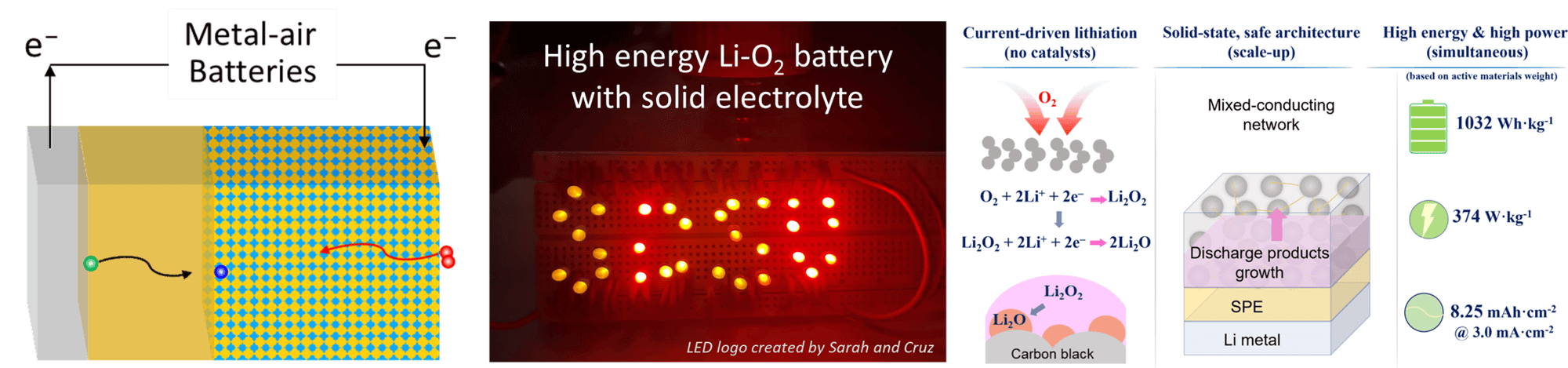
All-solid-state lithium–oxygen (Li–O₂) batteries offer a theoretical specific energy of ~5220 Wh/kg, approaching that of gasoline, by enabling a complete four-electron oxygen reduction reaction (4e⁻ ORR). Our research focuses on: (1) elucidating the mechanisms and dynamic processes underlying 4e⁻ ORR at gas–solid–solid three-phase interfaces; (2) rationally designing robust solid electrolytes for long-term, stable operation of solid-state Li–O₂ batteries; and (3) developing field-assisted ORR/OER strategies to reduce polarization and improve energy efficiency. [Refs. 1, 2, and 3]

Solid-state Li-metal batteries, featuring solid electrolytes and Li-metal anodes, offer enhanced energy density and safety compared to the present Li-ion batteries. In order to advance their practical applications, our focus centers on solid electrolyte processing and addressing interfacial issues, particularly electro-chemo-mechanical degradations, to enhance long-term cycling stability. [Ref. 4]
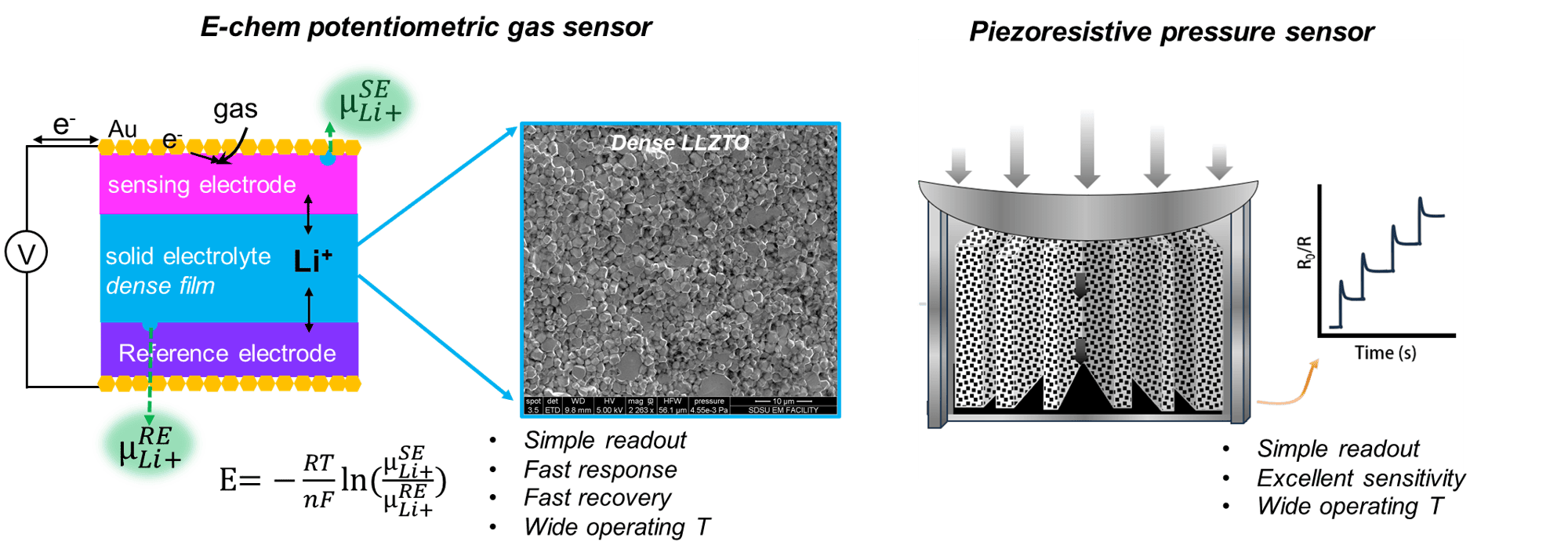
Early Detection of Battery Safety
Operando Characterization

Recycling Battery Materials

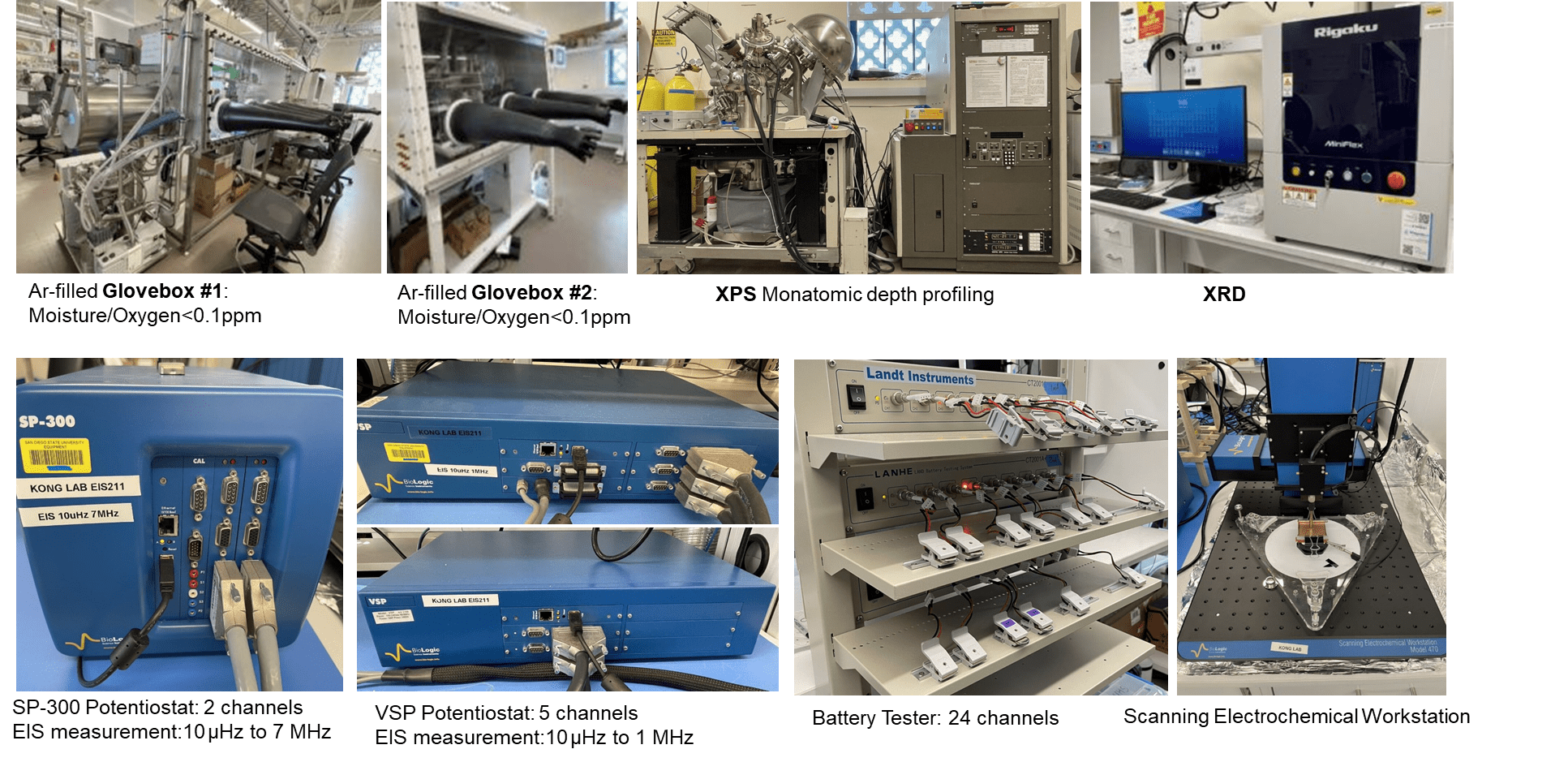
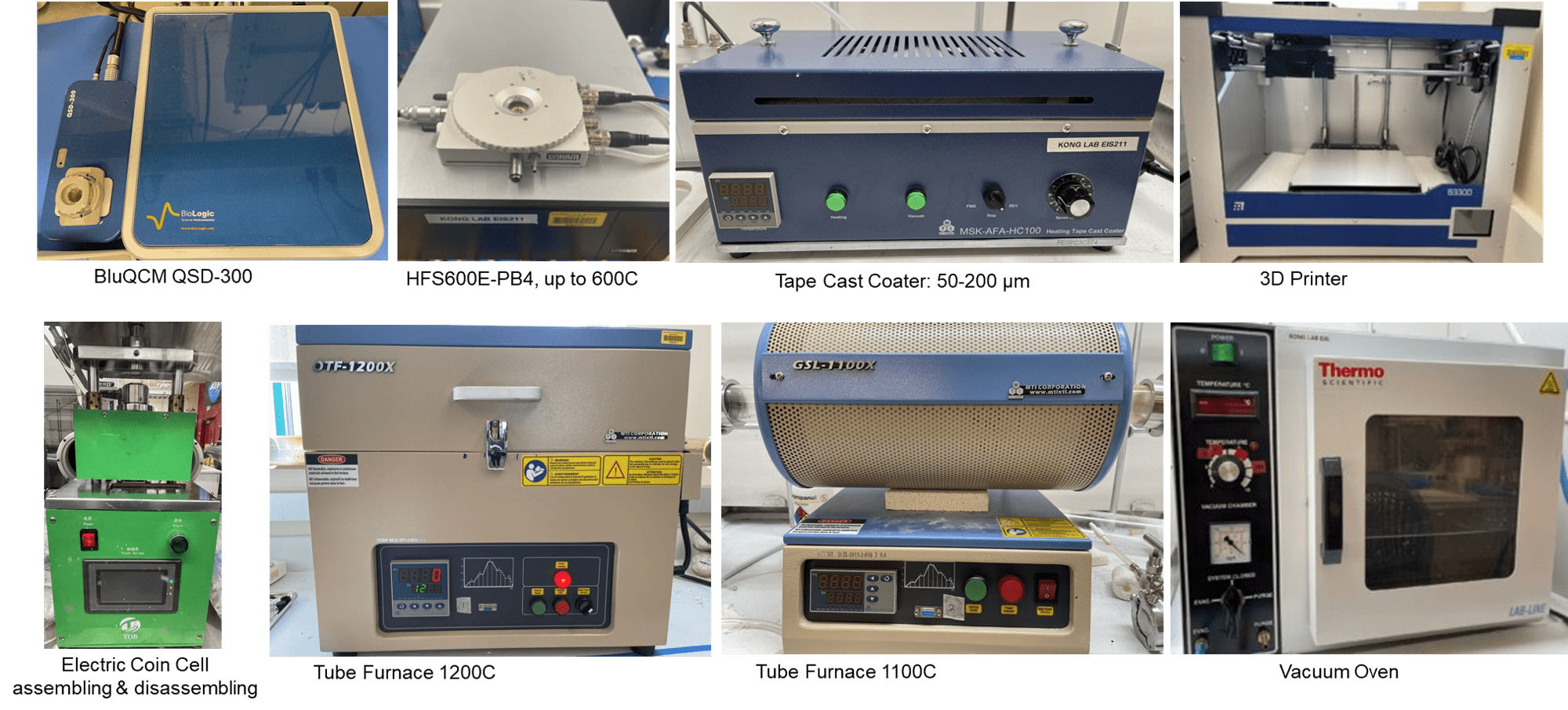
Lab Resources